

Where is Russia Today?
Casting a light on global Russian military activity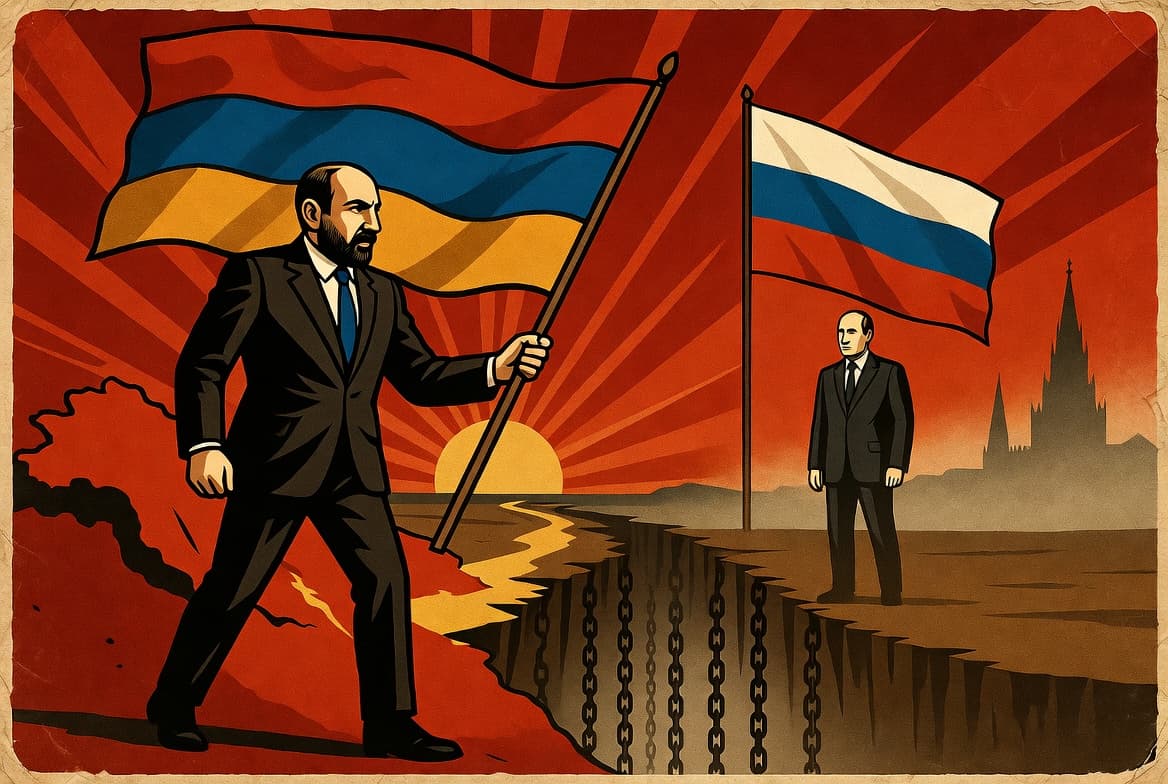
From Patron to Pressure: Russia’s Shrinking Leverage in Armenia
With elections approaching, interference remains Russia's preferred instrument of control over Yerevan, amid declining regional influence.
Armenia’s relationship with Russia has entered a period of visible and obvious strain, and a significant body of work suggests that the shift is less about dramatic separation than about a gradual and consequential transition.
Analysis conducted on assessments and in-country reporting converged on a central conclusion: the tradition of Russian dominance in Armenia is eroding, and Moscow is attempting to adjust accordingly to stay engaged in the South Caucasus.
The formerly long-standing Armenia–Russia partnership once rested on firm security guarantees, but this political alignment is no longer on autopilot and isn’t functioning as it once did. Growing Armenian dissatisfaction with Russia’s performance as a security partner and backer, particularly amid severe regional crises, has encouraged decision-makers in Yerevan to reassess and broaden their diplomatic and strategic horizons. Engagement with Western institutions and deeper ties with the United States and Europe are increasingly part of Armenia’s foreign policy conversations. The movement is not being framed as a wholesale geopolitical break, but rather as a continued effort to reduce dependence on a single power in light of perceived Russian failure to uphold security obligations.
Moscow appears unwilling to concede influence in the region. However, the form that influence takes is evolving. Assessments of potential scenarios suggest that a conventional military intervention at this stage is unlikely for a number of reasons. Russia is already stretched thin from a military perspective due to its illegal, full-scale invasion of Ukraine. The almost unsustainable operational tempo, attrition of experienced units, and inability to open a new front while struggling with the current one all point toward this being unworkable as a course of action. Whilst Russia does maintain a small military presence in Armenia, the two states do not share a border, and in the event of escalation to violence, regional relations would complicate any option other than air insertion and resupply. Russia’s last performance when attempting an air insertion into Hostomel Airport in 2022, coupled with the subsequent catastrophe, would make this inadvisable, to say the least.
A covert and hybrid approach is likely the preferred option for Russia. A spectrum of indirect instruments is at Moscow’s disposal in this area. These range from geopolitical interference and networking of elites between the two states to economic leverage and information campaigns. These tactics have previously been used in post-Soviet states, with mixed results, including the shaping of the Ukrainian information space and the attempted and failed interference in the 2025 Moldovan election.
Several of Armenia’s opposition parties are widely viewed as advocating for closer alignment with Moscow, including the Armenia Alliance, led by former President Robert Kocharyan, and the Prosperous Armenia Party, founded by businessman Gagik Tsarukyan. Beyond formal party politics, media networks, compounded by business elites and advocacy platforms, echo Russian narratives, enabling and reinforcing Moscow’s attempts to shape debate without overt control. These actors (sometimes paid and often just “useful idiots”) illustrate how influence can operate through domestic channels without relying on direct state-to-state intervention.
Looking westward, Prime Minister Nikol Pashinyan and his Civil Contract party have emphasized democratic reform, institutional transparency, and deeper engagement with Euro-Atlantic partners. Yerevan has expanded cooperation with the European Union through the Comprehensive and Enhanced Partnership Agreement (CEPA), increased political dialogue with Washington, and hosted joint exercises with Western actors. Armenia has also taken steps to reduce its participation in Russian-led structures, including freezing involvement in the Collective Security Treaty Organization and questioning the practical value of that framework after perceived security shortcomings.
Political commentary and public discourse have likewise shifted. Opinion polling and civil activism reflect growing skepticism toward Russia’s reliability as a security guarantor, particularly following Moscow’s limited response during regional crises such as the conflicts around Nagorno-Karabakh. Simultaneously, there is rising support for closer integration with European political and economic institutions.
The willingness of Armenia’s administration to openly question and transition away from its arrangement with Russia toward deeper ties with the West highlights a significant erosion of historical ties. As Armenia’s political balancing act redefines its future in light of upcoming elections, Yerevan’s pivot westward creates new opportunities to resist pressure from Moscow.