

Where is Russia Today?
Casting a light on global Russian military activity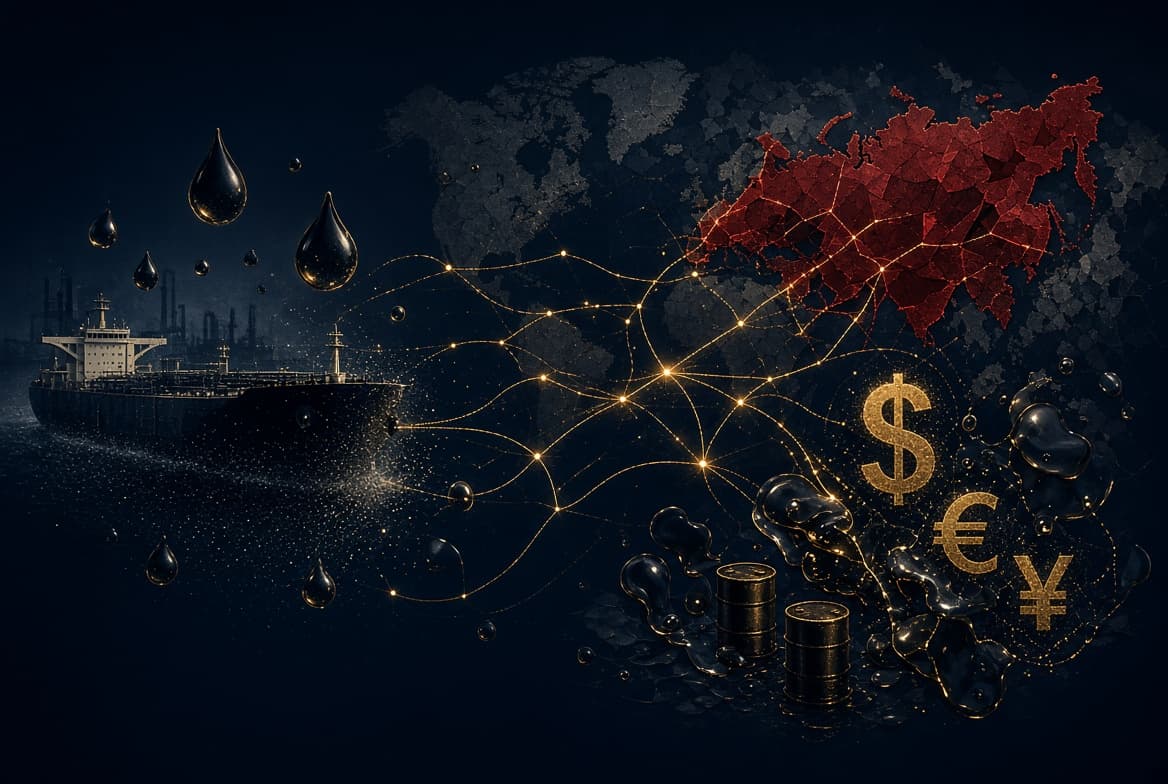
How Russia Is Dodging Sanctions: The Full Playbook
When Western governments imposed sweeping sanctions on Russia after its full-scale invasion of Ukraine in 2022, the expectation was that cutting off access to global finance, advanced technology, and energy markets would significantly weaken the Russian economy. More than three years later, those restrictions have undoubtedly raised costs and complicated trade. But Russia has also built an extensive network of workarounds that extends far beyond its much-publicized Shadow Fleet of aging oil tankers. From rerouted supply chains to alternative payment systems, Moscow has developed multiple strategies to keep goods flowing and energy exports moving.
Parallel imports keep Western products on Russian shelves
One of Russia's most effective responses has been the legalization of parallel imports. Instead of buying directly from manufacturers that exited the Russian market, importers purchase the same products through third countries. Electronics, luxury goods, industrial equipment, and automotive parts often pass through intermediaries before arriving in Russia, allowing consumers and businesses to continue accessing many Western brands despite official restrictions.
Third countries have become critical trade hubs
Trade data shows that exports of electronics, machinery, and dual-use goods to several countries bordering Russia increased sharply after sanctions took effect. Some of those products are consumed locally, while others are re-exported to Russia through complex supply chains involving multiple intermediaries. This makes enforcement more difficult because the goods are no longer traveling directly from Western manufacturers to Russian buyers. Governments have responded by increasing scrutiny of these trade routes, but monitoring every intermediary remains a significant challenge.
Procurement networks continue sourcing critical technology
Despite export controls on advanced semiconductors and industrial equipment, investigations by governments and research organizations have repeatedly identified procurement networks acquiring restricted components through distributors in multiple jurisdictions. Many of these items are commercially available and have both civilian and military applications, making enforcement particularly difficult. Authorities in several countries have tightened export controls and targeted intermediary companies, but new procurement networks continue to emerge.
Domestic production has become a strategic priority
Import substitution has become a central pillar of Russian economic policy. The government has invested heavily in expanding domestic manufacturing across sectors ranging from agriculture to defense production. Results have been mixed. Russia has reduced dependence on imports in some industries, but replacing advanced foreign technology has proven far more difficult, particularly in sectors requiring sophisticated semiconductor manufacturing or precision engineering.
Russia is building alternatives to the Western financial system
Financial sanctions cut many Russian banks off from key international payment networks. In response, Russia expanded its domestic financial infrastructure while increasing trade settled in currencies other than the U.S. dollar and euro. Transactions with major trading partners increasingly use local currencies, reducing dependence on Western-controlled financial channels. Although these alternatives cannot fully replace the global financial system, they have helped maintain cross-border commerce.
Sanctions are working - but not perfectly
The existence of these workarounds does not mean sanctions have failed. Economists generally agree that sanctions have increased costs for Russian businesses, reduced access to advanced technology, discouraged foreign investment, and slowed long-term economic growth. At the same time, Russia's ability to adapt through rerouted trade, alternative finance, and new logistics networks has made the restrictions less absolute. The result is a prolonged economic contest: as sanctioning countries tighten enforcement and close loopholes, Russia continues searching for new ways to keep trade moving. The Shadow Fleet may be the most visible symbol of that effort, but it is only one part of a much broader strategy designed to keep the Russian economy connected to global markets despite unprecedented international restrictions.
